

- June Friends meeting
The FoCC is holding a Friends meeting on Wednesday 17th June 2026.
Tim Read, CoB “Biodiversity Programs Officer” will outline the “Links across the divide” project scope and progress so far. The City of Ballarat is working with adjacent councils on identifying the bio links within the region. This includes the Wombat to Enfield Biolink of which the Canadian Corridor and Woowookarung Regional Park are central elements.
June Friends meeting: “Links across the divide”
7.00pm Wednesday 17th June 2026
Buninyong Community House, 407 Warrenheip St., Buninyong
All welcome
- Goldfields Track planning workshop
A FoCC special meeting to discuss the Goldfields Track will be held at 7pm on Thursday June 11th at the Buninyong Community House 407 Warrenheip St Buninyong. The meeting will focus on possible trails through Woowookarung Regional Park through to Buninyong. All friends welcome.
- April Friends meeting
The April friends meeting was held on Wednesday 29th April at the Buninyong Community House. David Bannear chair of the Goldfields Track group spoke about the “Goldfields Track and a possible path through Woowookarung Regional Park” David told the story of how the track started in 1992 as the Great Dividing trail and has grown from a walking track only to walking and cycling trails between Ballarat and Bendigo.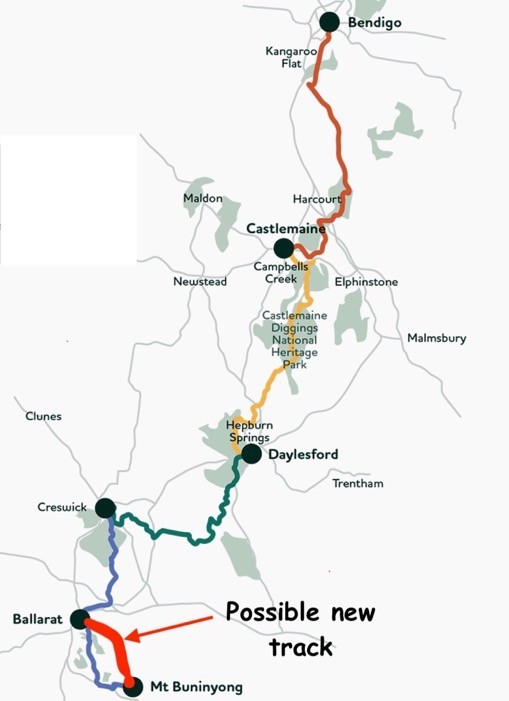
The Goldfields Track showing the possible new path. 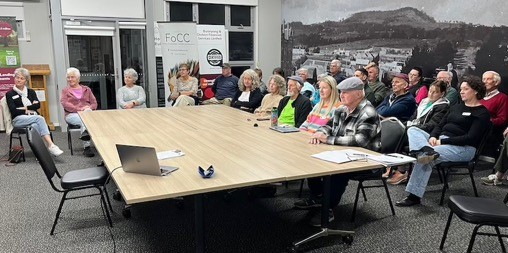
Friends listening to the Goldfields Track story.
- Friends of Lake Esmond working bees
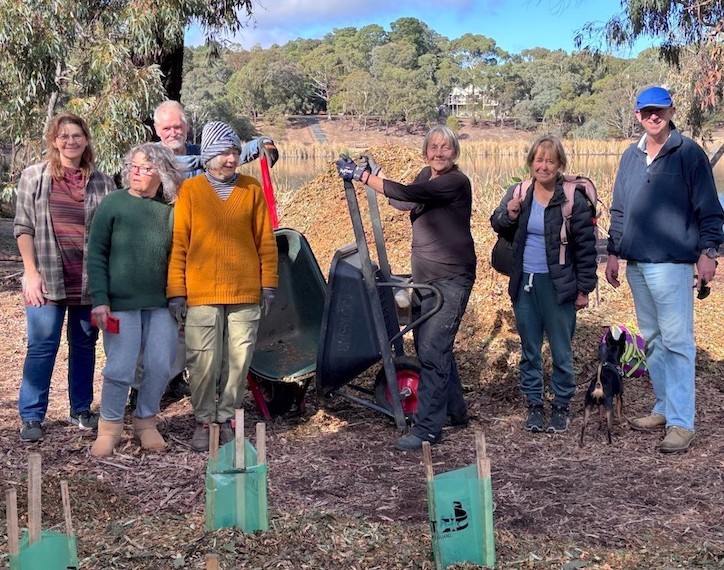
Friends of Lake Esmond, a subgroup of the Yarrowee Leigh Catchment Group, had their first activity on the 9th of May. We optimistically gathered in the morning to plant 100 ground covers. The Lake gardens already have a good number of established trees, but the ground is very bare, so the focus is on the ground covers. We had a great, successful time. 9 people turned up, and we managed to plant just shy of 80 plants and spread a good deal of mulch. We worked for just over two hours, not wanting to push anyone too hard, but enjoying the time together. With the leftover plants, we had a follow-up planting on the 17th of May and managed to get the rest of the plants into the ground, with a few fewer people. We are looking forward to seeing the growing results of our work and building a nice sense of community around Lake Esmond. Next planting will be on 27th June from 10 am. If you would like to join in, please do come along. We will be planting either side of the Larter St entrance. (Hopefully it won’t be too cold and wet!)
For further enquiries, please contact Michael O’Brien: mikeobblt@gmail.com
- Friends of Specimen Vale working bee
Next working bee is to be held at: Site 3 : Otway Street end, 9:30 -11:00 am (followed by morning tea). Thursday 4th June 2026.
- Joel Ellis achieves 50 “Bird of the Month” articles!
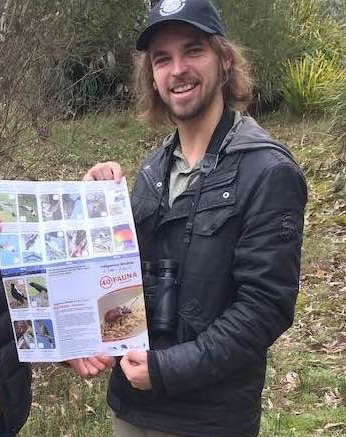
Rob Loveband FoCC webmaster in discussion with Joel Ellis:
How did you become interested in birds?
My interest in birds developed from a young age. While still in primary school, I bought my first bird field guide. At that age, I mostly used the field guide as a road trip staple, helping me to ID raptors — my favourite group of birds — seen during our travels through the countryside. Predator birds were the favourites as I’ve always been fascinated by any fauna which lived off anything that runs/flies/hides from it.
How has your interest in Birds influenced your life?
Birds have been an addictive hobby for me (particularly since 2016). Birding has helped me connect with the natural world, and appreciate real-life actualisations of scientific theory (e.g. ecosystem services, symbiotic relationships, bio-indicators), while also tangibly uplifting me with multiple health benefits (i.e. physical activity, plus the soothing effects of greenspace immersion, birdsong, etc.).
I studied Environmental Science from Year 10 through to University (Honours), and gradually specialised increasingly on birds. Dr Grant Palmer was a pivotal mentor, as he believed in my identification skills, and introduced me to EBird — which awakened my passion for actively collecting and reporting bird sightings data.
What caused you to begin writing bird on the month?
The BotM idea was initially inspired by a segment in BirdLife Australia’s bulletin. The FoCC Committee foresaw the potential to put an intimately local spin on the BotM, by featuring a carefully selected, topical species in Ballarat’s ever-dynamic bird assemblages during the given time.
Writing Bird of the Month was and continues to be a passion project that has provided me with a rewarding platform to raise awareness about the importance and beauty of our local birds. It has reinforced my knowledge uptake and encouraged me to closely monitor monthly/seasonal trends in local bird communities. It’s a blessing to have this creative outlet to express my passion, and hopefully inspire a passion for birds in the Spikey News readers! Getting approached at FoCC General Meetings by readers who tell me that they enjoy reading the BotM every month, is the most heart-warming part about my time as a volunteer with FoCC!
Acknowledgments
From the bottom of my heart, thank-you to FoCC Committee, for their teamwork in proofreading and editing my drafts, and ultimately bestowing upon me the honour of contributing BotM columns to Spikey News. Special thanks to our resident bird photographer, Rob Loveband, for being a skilled, reliable and generous image donor, and cooperative collaborator! And an equally wholehearted thanks to our readers for your kind and supportive feedback, and your impressionable and undying readership!
NOTE: you can read all of Joel’s BotM editions here – they are being updated over this week from the latest edition back to the first one.
- Bird of the Month XLX (April / May 2026)
Eastern Rosella (Platycercus eximius)
Local First Nations names: kuitj kuitj / kut-kut
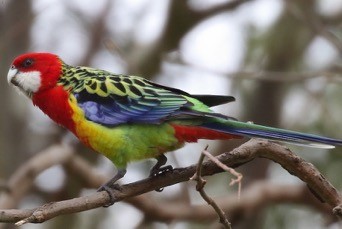
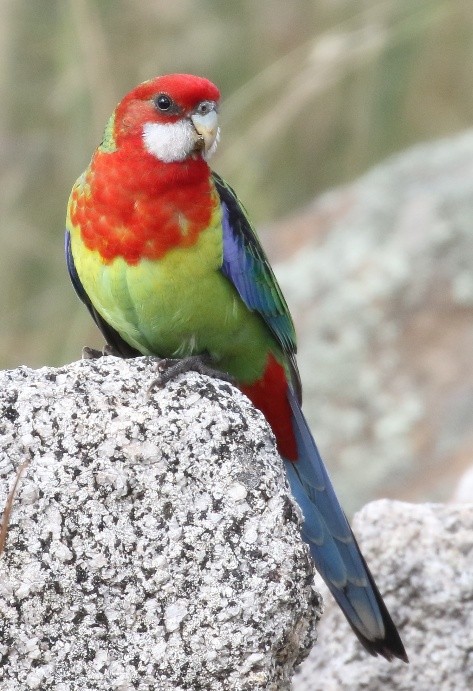
The Eastern Rosella bursts with fruity colours, shining like a beacon in the Aussie bush, with its rich scarlet red front (and vent), vibrant lemon-yellow belly, and vivid lime-green lower abdomen and rump (the green rump is conspicuous in flight). The species is largely sexually monomorphic, but subtle differences exist: females tend to show duller, patchier red with faint yellow mottling through the nape and chest. Juveniles are greener and patchier, with red gradually replacing the green as they mature.
Eastern Rosella breeding season is August through February. They are hollow-nesters, selecting deep, often narrow hollows in trunks or limbs of live or dead trees. Occasionally they use low stumps or logs, but usually nests are high off the ground. The female incubates 4–8 eggs for 19–20 days while the male feeds her near the nest. Both parents feed the young, which fledge at around five weeks.
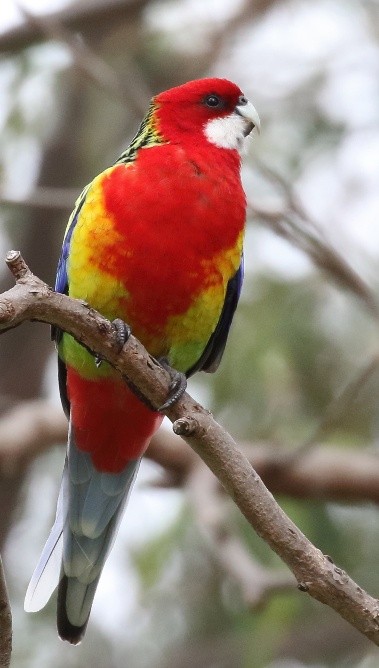
Eastern Rosellas are primarily granivores (seed- and grain-eaters) and forage across varied strata: grazing on the ground, feeding in shrubs, and feeding in trees. They also consume fruit. The species occurs in lightly treed country, farmland, watercourses, woodland, forest edges, roadsides, golf courses, parks, and gardens. They are sedentary (non-migratory), resident year-round, and occur in pairs, family groups, and small flocks.
Vocalisations
Eastern Rosellas can be chatty, often flushing into undulating flight with a brisk, sharp, clear, rapid “quink-quink, quink-quink” and even more rapid “whit-whit-whit-whit”. Other calls include a slower, drawn-out, high, clear ringing “pee-pt-eee”, “pink-pink”, and soft chatterings. My sister has nicknamed them the “Beep-beep Bird” for their recognisable flight call.
Eastern Rosellas are distributed throughout all of Victoria, the eastern half of NSW, southeast QLD, southwest SA, and much of Tasmania. Populations in all states and territories are considered ‘Secure’, and the species’ global conservation status is ‘Least Concern’ with an ‘Increasing’ population trend. They are said to benefit from partial clearing of dense forest into more open habitat.
Next time you wander through Woowookarung RP, or skirt its edges or those of any forest patches, farmland, parks, gardens, golf courses, or roadsides, keep an eye out for the fruity colours and pleasant chattering of the Beep-beep Birds that are Eastern Rosellas. And if you’re lucky enough to encounter them, perhaps spare a thought for the loved ones who would most enjoy these, and other birds, that have graced you with their presence.
Author note: FoCC Committee member and co-admin of FoCC’s Facebook and webpage, Joel Ellis is the resident bird nerd, amateur Powerful Owl researcher, and editor of FoCC’s (co-funded) ‘Indigenous [Species] of Southern Ballarat’ brochure series. Joel has studied birds up to Honours degree level, is a professional ecological consultant (ornithologist), and member of BirdLife Australia (Ballarat branch).
- Koala Sightings
April to September is a quiet time for Koalas. If you see, hear or find scat from a Koala, please send the information containing the when, where, and how to: foccinfo@gmail.com. Images are gold (even if a little blurry). All Koala sightings are entered into the iNaturalist online data base.
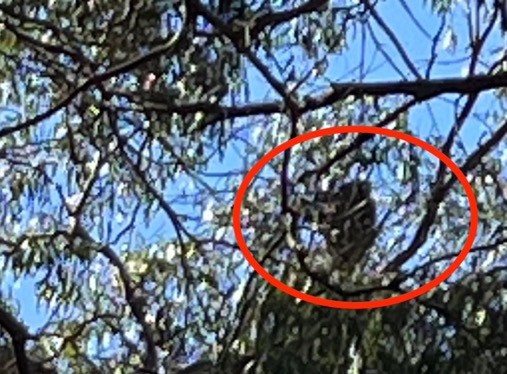
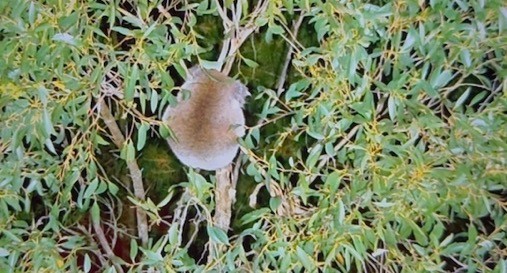
Andrew and Kyle have been experimenting with a drone to locate Koalas in bushland. The drone uses infra-red technology to locate warm animals. A spot light camera is used to identify warm animals. On the flight, a fox, a possum, a wallaby and a koala were located and identified
Andrew and Kyle are in the experimental stage and they hope in the future to be able to survey properties and find out what is actually living on a property. Stay tuned.
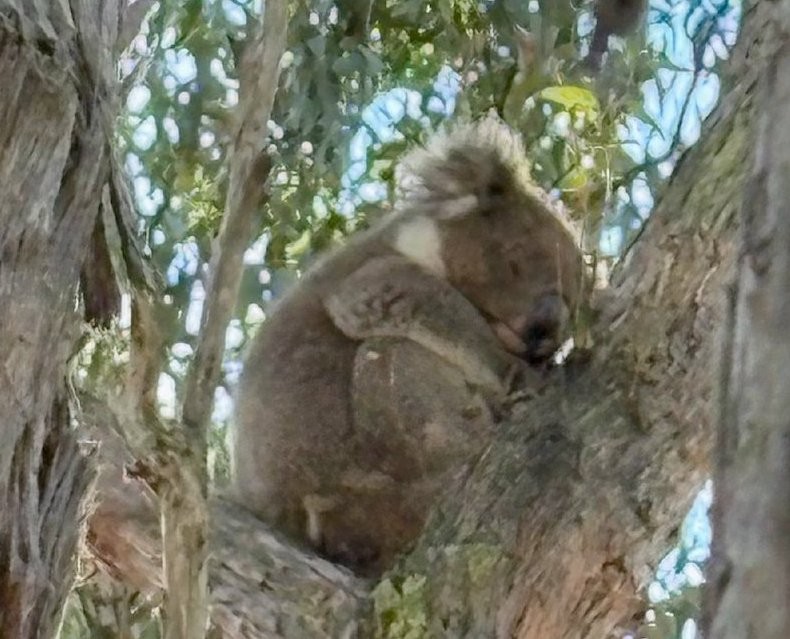
Heard: Koala on Gear Avenue Fed Uni, May 9th Observed by Denise.
The complete list of Koala sightings can be viewed at https://www.focc.asn.au/koalas/
- Soapy’s Dam working bee
20 wonderful volunteers picked up hundreds of broken-down tree guards for recycling at Soapy’s Dam on Sunday 24th May. Over 600 tree stakes were collected, sorted for reuse at a future planting. Last august 400 trees shrubs and grasses were planted on the site and a count today had the success rate at 90%. The plantings used corn-starch-based tree guards which are biodegradable and need to be broken down in composter. The bags of guards will be sent to a composter. See image below of broken-down tree guards. Another 50 plastic tree guards were collected for future reuse. A planting will be held at the dam on the 23rd August 2026. Any failed plants will be replanted.
The working bee was the first time the FoCC trailer has been in use. Thank you to the City of Ballarat for funding the purchase of the Trailer.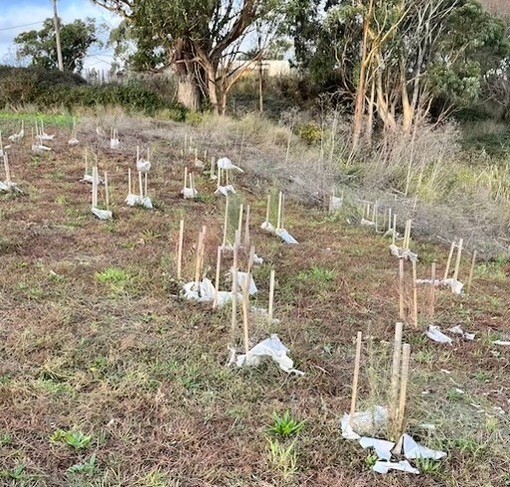
Broken down corn starch guards. Image 21st May 2026. 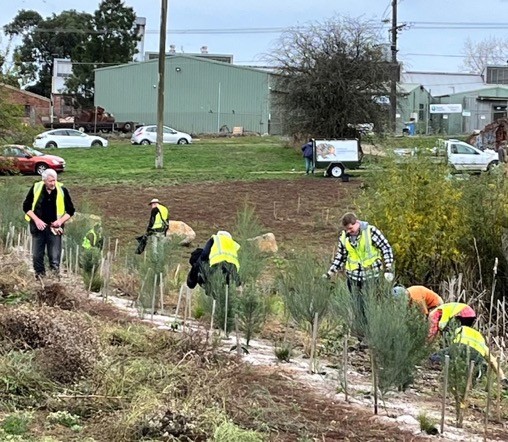
Volunteers at work. Image 24th May 2026 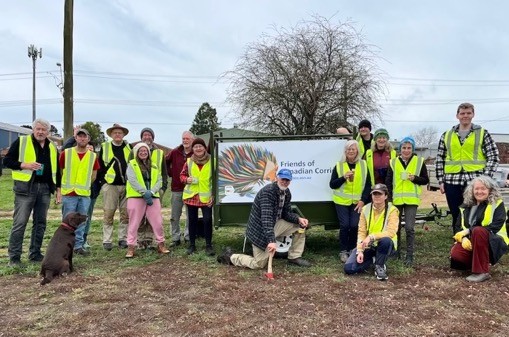
FoCC volunteers at Soapys Dam with the new Trailer. Image 24th May 2026.
- Spikeys Trailer
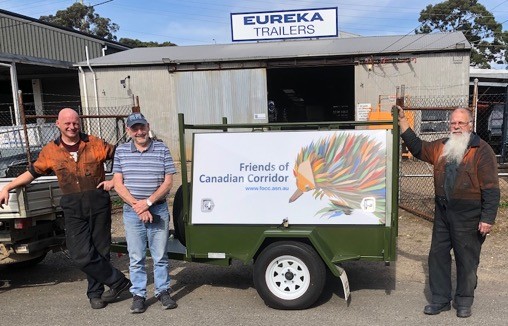
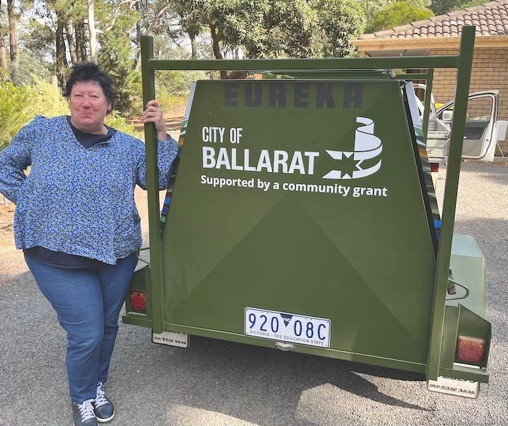
This time last year the FoCC successfully applied to the City of Ballarat community fund for a grant to purchase a trailer to carry our tools, plants stakes and guards to tree planting sessions. The trailer was manufactured and purchased from Eureka Trailers in Melbourne Rd Brown Hill. This met a city of Ballarat Request to utilise local businesses as much as possible.
- Urban Ripple 2026 program.
FoCC community Tree Plantings for 2026.
- 28th June – Canadian Creek
- 12th July – Dozed Track
- 19th July – Lal Lal Drain
- 2nd August – Canadian Creek
- 16th August – Sailors Gully Creek
- 23rd August – Soapy’s Dam
and
- Children Forest Planting, June 30th – Canadian Creek reserve. See article below.
2026 Tree, shrub and grass orders. The FoCC has ordered 4500 plants from the Wadawurrung Indigenous Nursery at Bostok and 2000 from Wine Barrel Banksias Nursery Buninyong for delivery in June.
20000 tree guard stakes have been ordered from local supplier Ross St Building Supplies.
The FoCC 2026 Urban Ripple planting dates and details brochure accompanies this edition of Spikey News.
- June 30th Children’s Forest Planting
A special children’s forest planting will be held on Tuesday June 30th. Bookings via Trybooking essential. Max number of children 50.
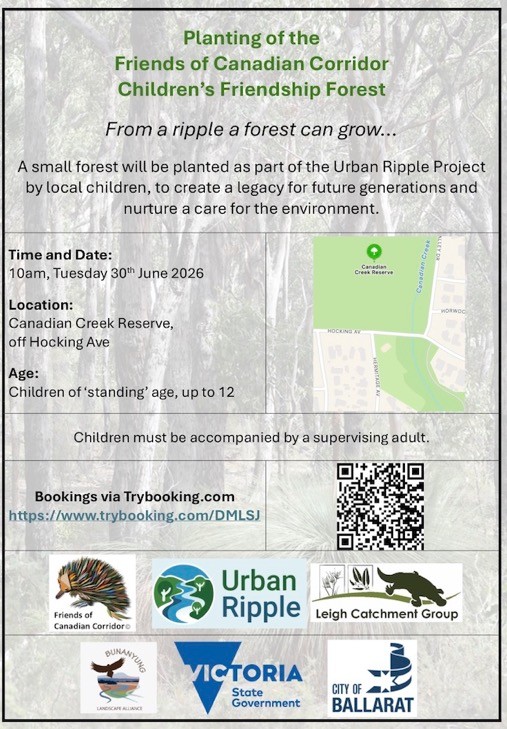
Bookings via Trybooking.com
https://www.trybooking.com/DMLSJ
- Union Jack Reserve walk
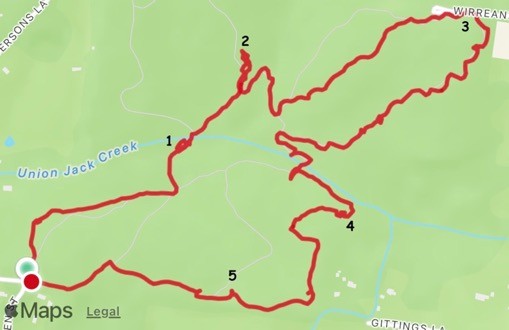
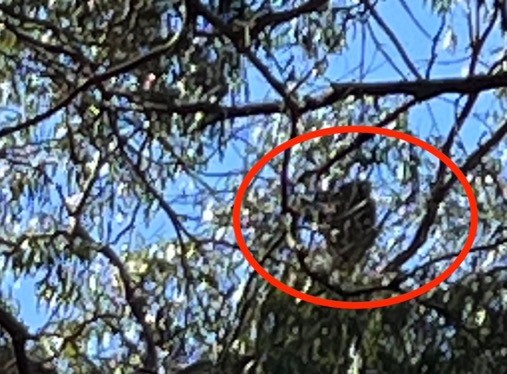
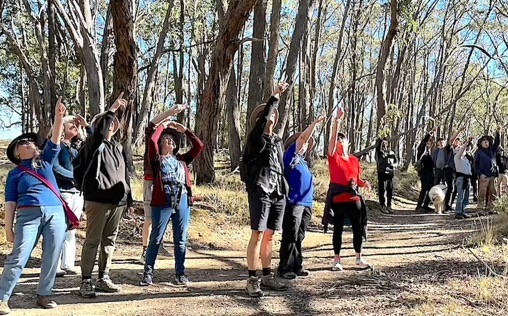
The FoCC held a discovery walk around Union Jack Reserve on a gorgeous autumn day for the FoCC walk on Saturday 18th April 2026. Twenty intrepid walkers were led by local naturalist Jez (Jeremy Goosens), pointing out historical mineshafts, tree ferns, gullies, hills and even a koala high in tree above the (4) mine site. According to Joel Ellis, FoCC bird expert, 20 different birds were observed or heard during the walk. Union Jack Reserve is one of the Corridors best kept secrets.
- Trashing our Bushland
Ballarat Courier Woowookarung Regional Park and surrounding areas have been subject to large amounts of illegal rubbish dumping over the past months. The Ballarat Courier highlighted the problem in a major article on Saturday 11th April Courier.
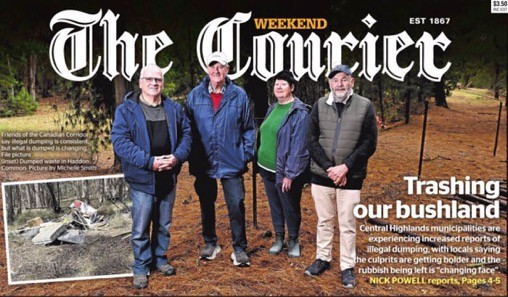
Lead Courier article on Saturday 11th April 2026. Image courtesy of the Courier
WIN TV
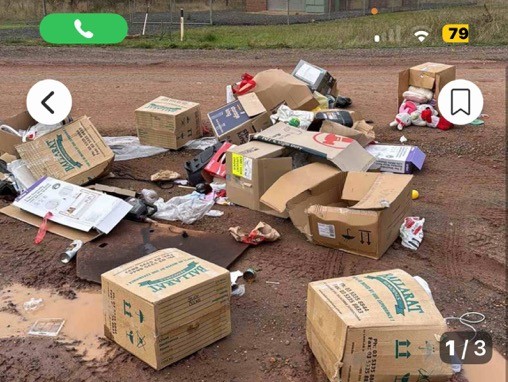
The following Wednesday 15th April 2026, the dump shown in the image below was found by a WIN TV Camera Person going to work. WIN TV’s Wednesday 15th April news bulletin featured the rubbish dump and FoCC president Jeff Rootes.
ABC Ballarat Radio
Further interviews occurred on ABC Ballarat Radio. City of Ballarat Director Bridget Weatherall told listeners that the City was going to make the Transfer Station at Alfredton more accessible. This would be done by opening a second lane and streamlining the facility.
Making the Transfer Station more accessible is something the FoCC has advocated for over the years. Well done City of Ballarat!
- Old artifact found
One of the delights of wandering through the Park are the birds, plants and leftover artifacts from the Gold Rush days. In a quiet secluded creek under a gorse bush this old sandstone grinding wheel.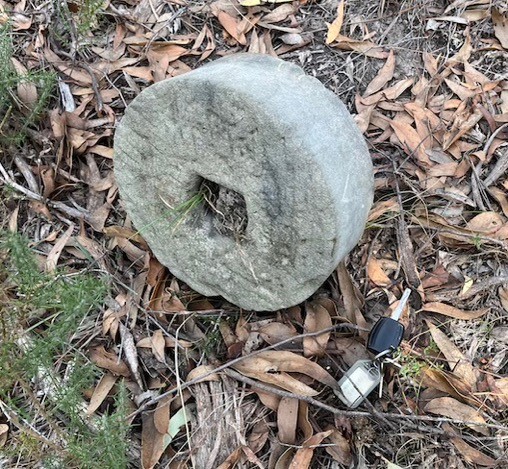
The sandstone grinding wheel. Image 1st May 2026. 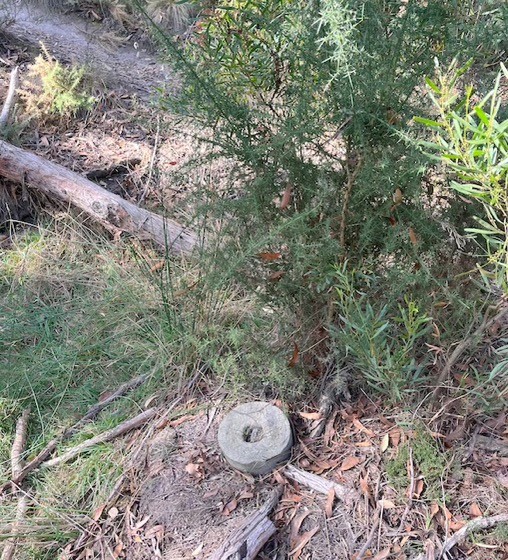
Where it was found.
- Warrenheip Big Battery
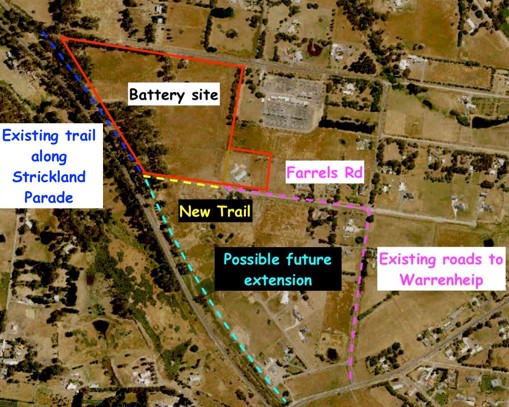
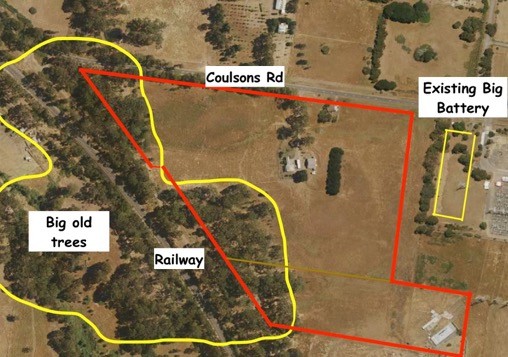
There is a proposal for a Big Battery to be built in Coulson Rd, Warrenheip, adjacent to the existing Big Battery beside the Warrenheip substation. The FoCC is supportive of the Big Battery and its role in supporting a sustainable energy future. The Warrenheip Big Battery held a “Drop-in planning meeting” on Thursday 23rd April at Warrenheip Hall and the FoCC attended. There are some good opportunities that arose from it. The Battery is adjacent to Ballarat’s last remaining stand of big old trees. The FoCC put the trees forward to CoB for heritage listing earlier this year. The protection of the old trees and the restoration of the landscape around and under the old trees would be a worthy achievement. The proposed Ballarat to Warrenheip walk cycle trail runs beside the site. The incorporation of a new section of the trail to connect Strickland Parade and Farrels Rd should be part of the development.
Shown below are the 2 FoCC maps showing the big trees location and trail connections which should occur as a part of the project.
To read the full FoCC submission: http://www.focc.asn.au/wp-content/uploads/2026/05/Battery-Submission-Apri-2026.pdf
- City of Ballarat Biodiversity week
The City of Ballarat is hosting a Biodiversity week August 1 to August 8 2026. The objectives of the week are to:
- celebrate and raise awareness of Ballarat’s biodiversity
- engage schools, community groups, and the broader public
- promote the Biodiversity Strategy and local conservation work
- encourage collaboration across organisations
- inspire action through education, art, and hands‑on activities
Many Nature friendly organisations are hosting information, walking, planting events during the week.
- FoCC Biodiversity Week Events
- Community tree planting – Canadian Creek reserve. 10am to 12 noon Sunday August 2nd. See Urban Ripple program for more information.
- Community Forum. Focussing on species extinction and whether science can reverse extinction. Guest Speaker has worked with the Woolly Mammoth project in the USA and brings a wealth of what can be done and what can’t. Monday August 3rd Barkly Square Theatrette, Barkly St Ballarat East.
- Ten Year celebration of the establishment of Woowookarung Regional Park. 10am Wednesday August 5th
- Opening of the 10000 Step Trail at Soapys Creek Bridge.
(Off Katy Ryans Rd) at 12noon Wednesday August 5th
As soon as the details of each event has been settled a special Spikey News will provide booking details.
- Rubbish dumpers, thieves and vandals
The FoCC urges Park friends to report vandals as well as rubbish dumpers, wood thieves and other suspicious activity to Parks Victoria on 13 1963 or email: woowookarung@parks.vic.gov.au
In emergency situations please call 000. If an offender is spotted, please note vehicle registration details as vehicle identification is most helpful, plus location and details. All information is treated by Parks Victoria Rangers professionally and confidentially.
- Useful information
- Parks Victoria Woowookarung email address: woowookarung@parks.vic.gov.au
- City of Ballarat wildlife information:
https://www.ballarat.vic.gov.au/me/pets-and-animals/wildlife
- Recommended Wildlife rescue: Wildlife Victoria (03) 8400 7300
- Koala spotting – https://www.focc.asn.au/koalas/
- Ballarat Wildlife Hospital: https://ballaratwildlifehospital.org.au
- DEECA wildlife issues reporting information
Report wildlife crime to Crime Stoppers Victoria on 1800 333 000. Report any wildlife at immediate risk of deliberate harm or neglect to 136 186. Other matters relating to wildlife and wildlife management should use the 136 186 too. The Help for Injured Wildlife tool will help you locate and contact the closest relevant wildlife carers and rescue and rehabilitation organisations to help the injured wildlife.
- Membership
Membership runs from 1st January to 31st December each year, Membership fee is $20 per year.
New members and renewals after July 1 2026 are credited to the next year.
- You can pay for membershipvia Trybooking at: https://www.trybooking.com/events/landing/1427368
Cost is $20.50 via Trybooking. You can also make a donation of any size via this process.
- Bank transfer to details: Bendigo Bank Buninyong BSB 633 000 Account No 184147098
Note: Please add your name to the bank transfer and email foccinfo@gmail.com your name and the date of the transaction. If your postal address has changed, please let us know.
- Payment to the Treasurer at a FoCC meeting
- FoCC Facebook and webpage www.facebook.com/friendsofcanadiancorridor/
Rob is overseeing the webpage webmaster@focc.asn.au
The FoCC has over 1400+ friends following us on Facebook and growing. Welcome to all new friends. Feel free to pass on to other friends and press the Like button.
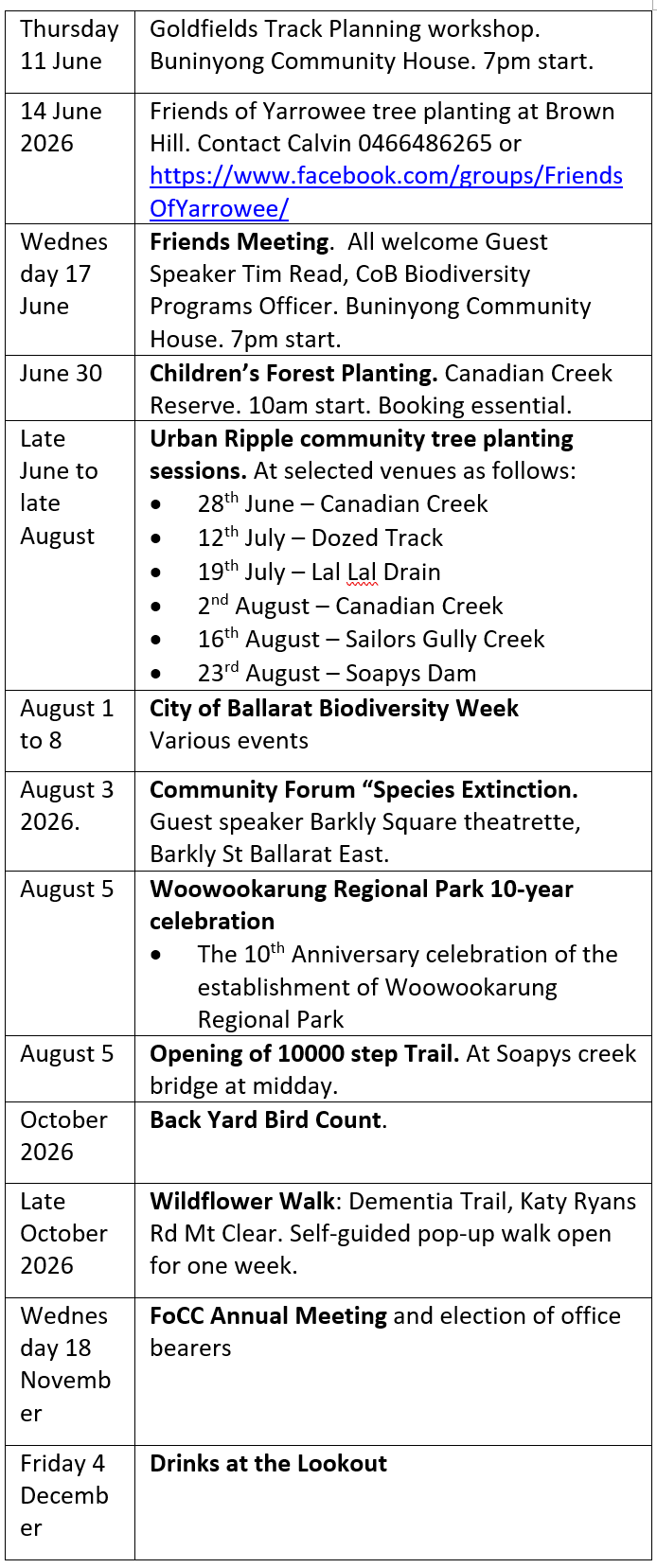
- 2026 Calendar
The calendar is prepared by the FoCC committee.
- FoCC Committee for 2026 is as follows:
| President | Jeff Rootes |
| Secretary | Hayley Inglis |
| Treasurer | Peter Darveniza |
| Committee members. | Jo Kelly, Tarn Kruger, Joan Brick, Rob Loveband, Jane Thompson, Bob Hartmann, Tracie Currie and Joel Ellis |
Spikey News change of issue dates
Spikey news is now be published six times a year for the Friends of Canadian Corridor Incorporated. Registered No A0097535B. The FoCC is an independent Landcare group registered with Landcare Victoria Inc. Each edition aligns with one of the six seasons which reflect how the Wadawurrung people and the seasonal changes in the landscape interact.
| Season | Spikey issue date |
| Mid-summer | End of January |
| Late summer | End of March |
| Autumn early winter | End of May |
| Deep winter | End of July |
| Early Spring | End of September |
| Spring and Early summer | End of November |
The purpose of “Spikey News” is to link the community to Woowookarung Regional Park and the Canadian Corridor. Circulation this issue is to 1261 1269 subscribers. Welcome to all new friends. Any opinions expressed in Spikey News are made by the editors in good faith and do not officially represent Parks Victoria or the FoCC.
Previous issues of Spikey news can be found at our web site, here.
We are proud to walk this land with the Wadawurrung people and all other First Nations people.